
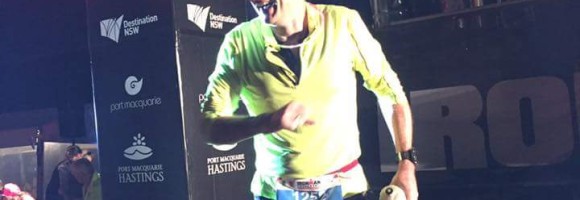


How did you feel crossing the line of your 1st Ironman in such an impressive time?

The time didn’t really register, I just felt an enormous sense of relief and excitement, a weight lifted off the shoulders to have finished.
In December 2014 I ran my first marathon, and around March 2015 dec

Latest Article
Power Meter for Dummies
Training Plan – Semester 1 : January – March
Semester 1 : January – March
10K & HALF MARATHON PROGRAMME
This programme is designed to help provide structure to your running training week. You may post questions to me at shem.leong@ironguides.net
The programme below should be done at your ability level:
Beginners: 10km @ 65++ mins
Intermediate: 10km @ 50 – 65 mins
Advanced: 10km below 50 mins
If in doubt always do the easier level as your 1st priorty is to training consistently.
It is also important to learn how to gauge your perceived effort level instead of relying on the pace on your watch because-
1) You will eventually develop an intituive ability to pace yourself accroding to the distance required.
2) You will automatically ‘buffer’ your intensity levels for varying levels of backgroud fatigue
3) You will be more confident in managing the dynamics of raceday conditions.
In this programme, will refer to 5 distinct
Track Attack Member Login
10K & HALF MARATHON PROGRAMME
16 Sept – 2 Dec 2015
Phase One (6 wks)
This 12 week programme is desigend for runners of all abilities who wish to complete in a 10km or Half Marathon towards at the tail end of the year. The entire is programme is divided into 2 halves.
Part One (below) focuses on developing Strength, Speed and Stride Rate while clocking some easy mileage for a sound aerobic base. While Part Two, to be refreshed after 6 weeks, is race- specific, where you piece together all the different elements for a successful race.
The programme below
Member Profile
Member Login
Training Plans

Athlete Profile: Paul McCalman

Meet Paul McCalman; loving father, business owner and dedicated triathlete. Paul’s hard work had been paying off this season with AG Podium’s in Penang and Desaru recently. Thanks for taking the time Paul…
First up – How did you feel crossing the line 2nd in your AG in Desaru 113 recently?
I actually came third in the age group I entered myself in, which was incorrect as I had actually entered myself in the younger age group. I should have been in the next age group up which I would’ve came second in based on my time.
Anyway, it was still a great feeling because that was my first podium finish in the longer distance event. Previously I had come second in the 2015 Penang International Triathlon which is an Olympic distance event
Briefly talk us through the race. High/ low points during the race. Standout thoughts at certain points in the race.
There were no real low points as my preparation and training leading up to the event were good. Shem and I devised a race plan and a hydration/nutrition plan, which I followed accordingly.
Swim: I had a good swim and after coming out of the water I realised I probably could’ve gone harder and faster as I didn’t feel too fatigued in my arms or body and I ran into T1 feeling very good.
Bike: I also had a good ride as I stuck to the race plan and also worked my nutrition and hydration plan properly which made all the difference as I was able to go hard and bring it home for the last 30kms which then helped set up my run.
Run: My run was ok but I had to back it off a bit at the 8km mark as I felt an old calf injury coming on. I was able to continue on and keep a consistent run rate going and bring it home for the last few kilometres, which was good.
My nutrition and hydration plan worked well. Throughout the race I kept reminding myself to trust my training (which Shem told me to think about), to stay focused and to instigate and keep strong thoughts happening, which is not always easy when you are hurting or struggling. It gave me the confidence to stick to the race plan and to lift and hold the intensity when needed.
How did your physical training prepare you to stay strong mentally throughout the race?
Just knowing that I had been training to a plan which had been developed to suit my abilities and to also handle the distances of Desaru 113 (swim: 2km, bike: 97km & run: 22.5km) was very re-assuring. I had confidence going into the race because I had done the necessary work.
At which point did you realize you could well and where/ what did you draw your strength/ resolve/ focus from to dig deep and go for it.

I felt comfortable coming out of the water for the swim and then during the first half of the bike leg I was pushing (but not overly hard) and still felt good, and then in the last part of the bike leg where I had been pushing hard, I didn’t feel as though I had over extended myself. That’s where I started to really go for it as I knew the training had paid off and I also knew that for the run, to an extent, that things would be okay with my legs and body.
I started out on the run and my legs and body felt good for the first 5km-10km and that also gave me the focus to continue to follow my race plan and to bring it home.
Let’s talk about your training. Can you briefly describe your weekly training schedule. How and why that’s working for you.
My training plan had me training every day for Desaru 113 and that covered two swim, three bike and two main run sessions, with one or two short brick runs off the bike if time permitted.
The training works for me because it has been planned around my lifestyle schedule, especially for work and family commitments. I also travel for work and I can still apply it accordingly with a bit of tweaking etc. and by staying in hotels with a gym and hopefully with an okay pool, otherwise I need to go searching for a decent public pool!
I find that the majority of training is not overly difficult and is sustainable as it doesn’t encompass long hours or high intensity sessions but strategic sessions to fit accordingly to my ability levels and lifestyle requirements.
Please share with us the 2 most important ‘take home’ messages that you have learnt about endurance training that everyone needs to hear.

The main one is definitely consistency of training is the key and the other is follow your training plan and trust the training your coach has devised for you.
I always stress the importance of communication in the coach -athlete relationship. Your thoughts on this please.
Yes I agree totally. A training plan is a plan, but plans can and should change or be revised accordingly to the athlete and their abilities, their level of fitness at different stages throughout the program and year, for the races that they are undertaking and their progression in the sport.
It takes time for a coach and an athlete to get to know each other and to develop the relationship and trust accordingly. All of this can only be done by open, clear and continual communication between each other. I’m based in Malaysia and Shem is based in Singapore so the majority of our communications are undertaken remotely by email, and for me that works fine due to time constraints
Any ‘life lessons’ you’ve picked up along your journey towards your 1st Ironman?
Yes I have learnt a number of life lessons. The main ones being, by undertaking consistent and correct types of training, having commitment, focus and discipline, you can achieve things that you thought were previously impossible.
I competed in my first triathlon in November 2013 and I will undertake my first Ironman in December 2015 at IMWA. I have the confidence to know that I can complete my first Ironman by undertaking and following the same commitment and procedures based around the plan that Shem devises for me for IMWA.
What are the benefits of having a coach? What are the characteristics for a good coach to look out for?
There are many benefits of having a coach. The main ones are that a coach can tailor and devise a training plan that suits your lifestyle, your time levels and that those training plans evolve accordingly overtime as you do as an athlete.
The main characteristics to look out for in a good coach are, clear and precise communication, high technical abilities and having the right levels of experience to go with it. The coach needs to be able to read their athletes accordingly based on the athlete’s skill, fitness levels, to be able to help and assist throughout the training and race phases, as well as during the off-season and if and when injuries occur.
Shem is my first triathlon coach and I have been engaging his services since June 2014. I look forward to continuing with him as he has helped improve my performance and abilities immensely.
Think you can go faster?
Yes I believe so as so the results so far have been the proof and I look forward to continuing on with my triathlon journey.

Recent Comments