Image Post

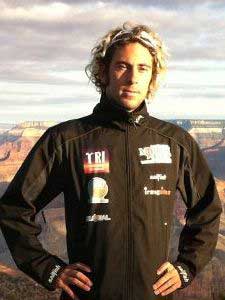
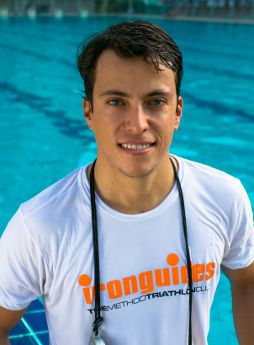
Profile: Roberto Carfagno

Roberto – Congratulations!  It’s a rare occurrence that an athlete finishes their maiden Ironman so close to 11 hours.  I’d like to get into your head a little and draw out inspiration for the rest of us age- groupers out here. 

 1. First up – How did you feel crossing the line of your 1st IM in such an impressive time? 

Strangely enough, I had my strongest emotions at the start of my second loop (out of three) on the run.

To understand the full picture we need to take into accounts a few details:

a)   I had never ran a marathon before and I didn’t know what to expect (a wall? Walk-run? Just walk?)

b)   Even though I had a goal to finish my 1st ironman in 12 hours I didn’t know if I was going to be able to achieve it.

My plan was as follows- Swim plus transition time – 1:30/ Bike: 5:30/ Run 5:00

The swim part went well time-wise and I had gained a few minutes on my time table, but the strong wind, the rough tarmac and the hills took their toll on my bike leg: 5:41. So I went into the run with a lot of respect and just replayed the same mantra. in my head: “smooth and easy”.

My coach had also told me to “Treat it like a long jog”. This piece of advice proved to be the real key for my run.

When I started the second loop with 28km to go, I checked my watch and realized that not only would I make it within 12 hours but rather in a low 11h if not better. Somehow, knowing that everything depended on my run skills, whether I could keep this speed, whether I hit that famous wall on the marathon, and the fact that I really really wanted to make it, brought me so close to an outburst and cry. Don’t ask me why! In my mind all the run-related exercises and sweat went through like a movie and I told myself that nothing would stop me now to reach those low 11 hours. Guess I am an emotional person..! ;)

On the last 3km I even found the strength to finish strong with a long sprint as I knew I had made it and by the time I crossed that line my emotions were already under control. Pity, actually…I even stopped a few steps before the ramp, took off my hat, “combed” my hair, zipped up my suit and bowed: we sure want to look good on the finisher pictures! ;)

2. Briefly talk us through the race. High/ low points during the race.  Standout thoughts at certain points in the race. 

  • Waiting for swim start – 

The walk from home to the race location was freezing cold. I felt excited and a bit anxious: I had never started a swim with so many people around me. And although I am a very confident swimmer, I had the worst of the starts one can imagine.

After 40-50m into the swim I simply felt I couldn’t breath. That “anxiety” was so strong that I stopped swimming with one hand and started to pull at my wet suit around my chest. This obviously made it worse as people behind me simply swam over me which made me swallow a lot of water. I was indeed SOOO close to withdraw from the race. And I presume I would have if not for the fact that if I had indeed stopped, I would have been overrun by at least 1’000 people behind me.

So I gathered myself and swam to the side of the bunch and that’s when it started to go well again. I guess that was my first panic-attack in my whole life and I still need to analyse it.

I followed my coach’s advice and kept drafting behind swimmers. As I found my confidence and rhythm in the open water, I found it quite fun to keep changing up to a quicker draft. In the end, it worked well and I arrived 15min ahead of schedule. This was a huge boost.

  • Mid way though the bike-

Based on my coach’s strategy to stay patient and conservative on the first 2/3’s of the bike I kept the whole first full loop “easy” and let people overtake me. The plan was to see how much I could push in the last 1.3 of the bike.

I started the second and last loop more aggressive. I knew that was when I had to attack as the wind was in favour and kept pushing it all the way through to the turnaround at km135. The last 45km, uphill and against the wind, were simply torture. With 25km to go, I knew that I wouldn’t manage to stay within schedule. This frustrated me and as a reaction I started to push harder. Man, that hurt!!!

  • Starting out on the run –

I started the run again very conservatively. Most of the athletes I had left behind on the swim and bike started to catch up and overtake me but that didn’t bother me. I was focused on being ready for the wall hence kept it at a steady pace. As described above, on the start of my second loop I had an emotional outbreak and that gave me the energy to keep going. I guess people are right when they say that nutrition is the 4th leg in an Ironman. Once I reached km32 I simply started counting down the km and went up with my speed. No wall ever hit me! : )

  • Finishing up on the run-

I think that was the most fun part of the whole race: I started to run as fast as I possibly could at that moment and I think I overtook about 50 people on my last 2km of the race. Awesome!

 3. How did your physical training prepare you to stay strong mentally throughout the race?

The last 2 months of the training depicted very well the mental conditions of the race. Although I had never rode 180km (160km was my max), and despite the fact that 180km ARE veeeery long, those long and lonely bike rides prepared me perfectly for race conditions.

Moreover, all the tough sessions I had leading to the race during the past 6 months helped me being confident that I can make it. If I had survived running up that hill for weeks and weeks and swim those laps till I was out of breath for months then I surely could do an Ironman!

4. At which point did you realize you could break your goal of 12h and where/ what did you draw your strength/ resolve/ focus from to dig deep and go for it.

That was my most emotional moment of the race. When I left T2, I was 5 mins behind my schedule with my ‘weakest’ discipline to go. Somehow I thought I wouldn’t make it within my goal of 12 hours. What I didn’t realize is that the clock showed the professional’s race  time. They started 15min earlier than us and I actually 10 mins ahead of my race plan!

When I started my second loop and I realized I was much faster than I had anticipated all emotions broke loose. And this somehow gave me the kick to keep running at my pace when about midway I felt my legs becoming heavier. A big help came also from the most powerful legalized doping drink: coke!!! Amazing how it can push you!

5. Let’s talk about your training. Can you briefly describe your weekly training schedule. How and why that’s working for you.

My coach and I had first a thorough discussion on my life style. Each aspect was taken into account and based on those inputs he prepared a training schedule that perfectly fit my needs.

Being single obviously helps a lot in my training as I can be more flexible on my training hours, but then, my job requires me to travel quite often which makes it a challenge to fulfill all exercises. I have learnt, though, that it CAN be done.

Every single day a little session will bring you through an Ironman!

In the 180 days that I have been with Ironguides, I have only missed 17 days of training- despite Christmas (on my bike!) and New Year (long run!).

6. Please share with us the 2 most important ‘take home’ messages that you have learnt about endurance training that everyone needs to hear.

No doubt about the first one which is also rightly highlighted by Ironguides: Consistency is key! Do a little bit every day and you will be ready at the start of your Ironman!

The second lesson that I learnt is the incredible power of the human spirit to overcome adversity.

For example – the number of times I wanted to skip training with teasers from my friends to join them for drinks or movies. Or when I had the panic attack, at the swim start and I almost withdrew from the race or when I almost got off the bike as my legs burnt so badly uphill against the wind.

But “nothing is impossible to a willing mind!”

7. I always stress the importance of communication in the coach -athlete relationship. Your thoughts on this please. 

With Shem I picked a winning lottery ticket.

We had an ongoing communication both with mails and face-to-face discussions. When going into your first Ironman there are many doubts, many anxieties, when starting for such a monumental endeavor there are various questions on the training and its effects, on how to pace yourself and what to take in as nutrition.

Communication and understanding from your coach is the second most important thing after…his training schedule!

8. What life lessons have you learnt on this journey to Ironman? 

I learnt that with discipline and putting in the correct effort, I can achieve anything. I might not be the fastest and quickest, but I’ll be there at the end line, no matter what challenge I face.

 9. What are the benefits of having a coach? What are the characteristics for a good coach to look out for? 

A coach brings in all the essential missing parts an athlete needs: experience, motivation, control.

A good coach should explain how he works, what the benefit is behind each training session. He/ She should also be receptive to the athlete’s needs and be open to adapt to it when necessary. He or She should also be able to push the athlete to get over his “comfort zone” both physically and mentally.

It is also important that a coach check in on the athlete, to regularly access their level of motivation and fatigue.

Indeed, there are just 2 options when you choose to work with a coach: either you trust him completely or you don’t.

10. Think you can go faster?

At 1.93m and 88kg I have all but a perfect triathlete “frame”. With such height/mass I suffer the heat more than a skinnier and smaller person hence IM races like Cebu and Langkawi I registered for will see me most likely go slower. Moreover, the swim leg in NZ was with a wetsuit which gained me at least 10min.

On the other hand, I have gained experience, especially on the run part, and I will keep on training consistently.

I am thoroughly confident that in a race that suits me in terms of temperature and route I will get in under 11 hours. Who knows, I might even take it down to 10:30!

Roberto finished in 11:08′. This was an awesome result for his 1st attempt at the Ironman distance. The major improvement for Roberto came from the work that we did to improve his running gait and efficiency.  While others may have questioned the rationale behind doing 15 x 100m running sprints for 12 weeks building up to an Ironman,  Roberto didn’t bat an eyelid. He simply got his head down and did the work and came out a much improved runner after that block. His admirable work ethic and his ability to stay open and receptive to The Method were the perfect combination to achieving this goal!

Coach Shem Leong


ironguides is the leading Lifestyle Facilitation company for athletes of all abilities. We provide coaching and training services, plans and programs, as well training education, health and fitness products to help you learn and live a healthy lifestyle. Come get fit with one of our monthly training subscriptions, event-specific training plans, coaching services, or a triathlon training camp in an exotic location! ironguides also provides Corporate Health services including Corporate Triathlons, Healthy Living retreats and speaking engagements. At ironguides, your best is our business!

Train with ironguides!

Personalized Online Coaching:  Starting at USD190/month

Monthly Training plans (for all levels, or focused on one discipline): Only USD39/months

Event based training plans:

Sprint Distance (USD45 for 8-week plan)

Olympic Distance (USD65 for 12 week plan)

Half Ironman (R$95 for 16-week plan)

Ironman (USD145 for 20-week plan)

X-Terra (USD65 for 12-week plan)

Running Plans (10k, 21k and 42k – starting at USD40)

 

Image Post

Abu Dhabi International Triathlon Course Review

Coaching Tips: The Abu Dhabi International Triathlon


The Abu Dhabi International Triathlon is fast becoming a must on the triathlon circuit.  For professionals the large prize money and the opportunity for an early season test are very attractive.

For age groupers, the unique distances (Super Sprint-750m/50km/5km; Short Course-1500m/100km/10km; and Long Course-3km/200km/20km) and very unique destination are attracting large numbers.

In its fifth year with the stunning Emirates Palace as the background for the swim, the YAS Island Formula One Circuit as the turnaround for the bike, and the Persian Gulf as the backdrop on the run, this event offers truly a stunning course and is sure to be added to an ever-increasing number of race calendars as word gets out.

While the course looks straight forward at first glance, the unique distances and always-difficult weather conditions can make this race very challenging.  Triathlons are supposed to be hard and inspirational, and this race is certainly both. Athletes have faced high winds and temperatures in the previous years, with the mercury climbing to the high 30s (Celsius) by the time athletes started on the run.

With very little shelter from both the sun and the wind, and blowing sand, athletes who were able to cross the finish line at the end of the day truly felt they had accomplished something special.

Swim (750m/1500m/3km)

The swim for the ADIT begins and ends on the white sand beach of the Emirates Palace. With 1.3km of private beach and over 1kg of edible gold used every year, it is easy to forget the long day you have ahead of you.

Long-course athletes swim 2 laps of the counter-clockwise rectangular swim.  With athletes going off in waves, this is one of the most ‘comfortable’ swim starts you will find in a race this size. Long-course athletes, however, re-enter the water after a short beach run and will have to navigate their way through the later-starting and slower swimmers from the short course and super sprint waves.

With water temperatures generally hovering around 23 degrees at this time of the year, all the talk leading up to the race focused on whether wetsuits would be allowed, or not.  In the end, race organizers decided to ban wetsuits for the professionals but allow them for age groupers.  This was a welcome decision. The buoyant salty waters of the Persian Gulf combined with the wetsuit made for a fast swim.

Swimming in a wetsuit, although it feels generally easier due to the extra flotation the suit provides, is harder on the shoulders.  Training in a wetsuit is recommended to strengthen your specific swimming muscles and to get used to the feel of the suit and the extra strain on the shoulders; however, this is not always an option for everyone.  A great way to simulate wetsuit swimming in the pool is to swim with paddles and pull-buoys.  Long sets broken into shorter intervals with the pull-buoy give the feel of the extra buoyancy of the wetsuit and the paddles add the extra strain on the shoulders.

A very good set to prepare for a wetsuit swim is:

Warm-up: 300m easy

28 X 100m swim as:

3 hard, 1 easy with 15s rest between intervals and an extra 30s rest after every 4th.

Cool-down: 200m easy

This session is about developing swim strength, improving your position in the water and developing an ‘open water’ swim stroke.  The main goal of this set is to hold your best time that is sustainable for the entire set.  Don’t destroy yourself aerobically.

Bike (50km/100km/200km)

The bike course is a 2-1/2 out-and-back course with athletes completing a lap of the world famous YAS Island Formula One Race track at the turnaround of lap 1 and lap 2.  The bike course is almost pancake flat with the only elevation change coming as cyclists cross Khalifa Bridge connecting Abu Dhabi Island with Saadiyat Island and again when crossing the small bridge connecting Saadiyat Island with YAS island.  Ironically the flat nature of the course is one of the things that make it so difficult.  In addition to the heat and potential for high winds, the flatness of the course means that athletes are time-trialing the entire distance.  This means no downhills to rest and no built-in opportunities to get out of your aerobars to stretch or change up your cadence.  To be successful on this course, athletes need to be prepared to sit in their aerobars and push a big gear for the duration of the ride.

The best training for this course is to do negative-split rides on a flat course in the aero position pushing big gears.

Long ride session:

3-4 hours Negative Split B.R.O Ride—that is 3 to 4 hours in Big Ring Only.

After a 15-minute warm-up, shift to your big ring.  Head out easy, staying in the aero position and keeping your chain in the big ring for the entire time.  Bring it home a little harder, but still under control.  Keep the cadence down and push the big gears!

Another great workout that can be done on the road or on the trainer is the weekly negative-split ride as:

20min easy

20 min moderate

20 min hard

Run (5km/10km or/20km)

The run course is 2 laps for the long course athletes, taking them from transition 2 on to the Corniche running path along the Persian Gulf to the turnaround on a point in the middle of the bay.  Like the bike course, the run course is flat.  Flat and, more often than not, very hot!  Like in cycling, a flat course also brings its own challenges for the run. However, with the long course being only 20km, you can take a bit of a risk and go for it on the run if you have anything left.

As with all triathlon runs, it is important to focus on a high stride rate.  The treadmill is a great tool for this, but this workout can also be done on the road or track:

Warm-up: 15min with 4-5 strides towards the end

Main set: 8 X {1min fast at 96 steps per minute, followed by 4min steady at 90 steps per minute}

Cool-down: 10min easy

Focus on high stride rate and running form during both the ‘hard’ and ‘steady’ sections.  During the ‘steady’ section, runners often drop their stride rate too much and lose form.  It is important during this portion of the set to focus on keeping the stride up and running with good form.

The final point to pay attention to when preparing for the ADIT is heat acclimation and hydration. This race can get very hot and it’s important for athletes who don’t train in hot climates to turn up prepared for the heat.  Here are some tips on ways cool-weather athletes can prepare themselves for the Abu Dhabi heat.  The most important thing is to get used to being uncomfortably hot for at least one to two hours of training per day in the month leading up to the event:

  • Use layers to stay warmer than normal.  Use wind-resistant clothing on the bike.
  • Wear a windproof layer to surround your body in a shell of humidity.
  • Wear tights sooner than you normally would.
  • Wear long gloves and a headband.
  • If training on the trainer or treadmill, turn off the A/C and fan.
  • Try to do as much training as you can during the heat of the day.

It is also important to begin getting your body used to being hot when you’re not training:

  • Avoid using the air conditioning during the month leading up to the race.
  • Turn up the heat in your car, at home, and in your office.
  • Wear an extra layer of clothes or a sweater.

Once you arrive in Abu Dhabi prior to the race:

  • Avoid (as much as possible) the air conditioning.
  • Do your training during the heat of the day and at times that will be similar to race day.
  • Finally, the day before the race, AVOID both the sun and exposing yourself to extreme temperatures.  Do your final sessions during the cooler part of the day or inside if necessary.
  • And, finally, hydrate and replenish during this acclimation phase.  Make sure you are paying attention to replacing fluids and electrolytes your body is losing through extra sweat due to the increased training temperatures.

The Abu Dhabi International Triathlon is a fantastic event and will be a memorable experience.  Hopefully, these tips give you a good idea of the challenges you will face and help make your day a superb one.


ironguides is the leading Lifestyle Facilitation company for athletes of all abilities. We provide coaching and training services, plans and programs, as well training education, health and fitness products to help you learn and live a healthy lifestyle. Come get fit with one of our monthly training subscriptions, event-specific training plans, coaching services, or a triathlon training camp in an exotic location! ironguides also provides Corporate Health services including Corporate Triathlons, Healthy Living retreats and speaking engagements. At ironguides, your best is our business!

Train with ironguides!

Personalized Online Coaching:  Starting at USD190/month

Monthly Training plans (for all levels, or focused on one discipline): Only USD39/months

Event based training plans:

Sprint Distance (USD45 for 8-week plan)

Olympic Distance (USD65 for 12 week plan)

Half Ironman (R$95 for 16-week plan)

Ironman (USD145 for 20-week plan)

X-Terra (USD65 for 12-week plan)

Running Plans (10k, 21k and 42k – starting at USD40)


Image Post

Ironman Melbourne Course Review

Ironman Melbourne Course Review – by Vinnie Santana – ironguides.net


The inaugural Ironman Melbourne proved one for the record books; a stacked field of professional athletes, including several world champions, delivered a Sub-8 hour performance by Craig Alexander and an oh-so-close Sub-8 for Cameron Brown, who finished second in an 8:00:12 personal best. Not to be outdone, female winner Caroline Steffen crossed the line in 8:34:51, smashing her PB by about half an hour; she is now the world’s second-fastest Ironwoman behind Chrissie Wellington.

I was fortunate enough to be down there supporting a group of athletes and witness the action firsthand. Here are my tips for athletes considering taking part in this event in the coming years.

I would definitely recommend this race for first timers; it will certainly provide a fun experience and conditions are relatively friendly, even in the very worst-case scenarios. Athletes seeking a Personal Best will find this race their winning lottery ticket as it is a very fast course with all the components that help speedy finish times: a wetsuit swim, cold weather, a flat bike and run, and swift competition.

The level of competition in Australian races is very high. Ironman Melbourne offers a great number of slots to the World Championships in Kona (75 this year and next). However, be ready to perform at a top level, i.e. high speed, if you are aiming to secure one since the combination of a fast course and strong competition makes this one of the fastest qualifying courses on the ironman circuit.

One downside involves the logistics of having two transition zones that are 42km apart. This makes it hard for supporters to follow the race, spreads the crowds on the run course which makes it relatively lonely and quiet for the athlete, and requires a very early wake-up as athletes still need to commute almost an hour to the start line in Frankston from the official hotel, and IM city, in St Kilda.

Finally, Melbourne is famous for offering all weather types in one day. Two days out from race day it was extremely windy—the chop in the water was such that I imagine the swim would have been cancelled if conditions had been the same on race day. If you plan to compete in Melbourne over the next few years and the race remains around the same time of the year, bring gear for all conditions and be ready for a blustery day, which may also impact equipment choice such as race wheels.

SWIM

Be mentally prepared to swim in the dark and use goggles with clear lenses. By the time the swim starts, the sun is not out yet. Most swimmers reported feeling lost during the first 10 minutes of the swim since it starts parallel to the shore and the lights on stand-up paddleboards get mixed with lights from nearby towns on the horizon. Find a pack to swim with so that it can help you navigate until the sun comes out.

Use a long-sleeve wetsuit as it helps protect you from the cold water and also will help you be warmer when starting out on the bike.

Wetsuit swims put a strain on the shoulders that you want to simulate in training. Do sets with a pullbuoy and paddles to mimic the extra flotation of the wetsuit with the increased strain on the shoulders. Example as below:

Warm up, then do main set:

With pullbuoy and paddles do 1 to 3 times 1.2km as:

400m HARD – 10sec rest

400m moderate – 10sec rest

400m easy

2min rest between each 1.2km set


This session simulates race start; flat out for the first third (note: don’t use the wall to push off as you don’t in the race either), then settle into a cruise pace for the second 400m, and then go easy in the last 400m to loosen up and recover for the next 1.2km set.


BIKE

It’s a two-lap course on a highway, with the first half lap on a very light incline and likely headwind, while the ride home is much faster on a slight downhill and with a tailwind. The inclines are gentle and the course could be considered flat, except for a couple of aggressive downhill and uphill sections near a tunnel.

Pacing is important as it is easy to overdo it on the first fourth of the course, and you want to be mentally ready for a challenging section from 90km to 135km. To simulate course conditions incorporate cadence variations on your long rides as per the example below:

On the back end of your long ride, add the following set:

2 hours moderate, alternating cadence as:

30min heaviest gear, if possible against the wind

30min at a 90+RPM cadence


This session will get your body and mind used to the different requirements of strength, muscle tension and cadence on race day. Remain on your aerobars at all times.


RUN

The unusual point-to-point format can make the 42km rather lonely as there is limited crowd support on parts of the run.

Expect a big variety of surfaces including roads, grass, gravel and trails by the beach, as well as a few sharp twists and turns.

The gradient also varies. To simulate that, do part of your specific runs on rolling hills and learn how to recover from running up a hill while you hold a moderate pace on the flat or downhill, as per the set below:

Hill repeats on the treadmill or road:


15min build warm-up, then:


[2min hard uphill (about 6-8%)

4min moderate on flat (keep the speed)

2min easy recovery flat/downhill if on roads]

Repeat the above 4 to 7 times

These workouts and information should give you the confidence that, even without having raced Ironman Melbourne, know what to expect and how to prepare for it.

Enjoy your training.

ironguides is the leading Lifestyle Facilitation company for athletes of all abilities. We provide coaching and training services, plans and programs, as well training education, health and fitness products to help you learn and live a healthy lifestyle. Come get fit with one of our monthly training subscriptions, event-specific training plans, coaching services, or a triathlon training camp in an exotic location! ironguides also provides Corporate Health services including Corporate Triathlons, Healthy Living retreats and speaking engagements. At ironguides, your best is our business!

Train with ironguides!

Personalized Online Coaching:  Starting at USD190/month

Monthly Training plans (for all levels, or focused on one discipline): Only USD39/months

Event based training plans:

Sprint Distance (USD45 for 8-week plan)

Olympic Distance (USD65 for 12 week plan)

Half Ironman (R$95 for 16-week plan)

Ironman (USD145 for 20-week plan)

X-Terra (USD65 for 12-week plan)

Running Plans (10k, 21k and 42k – starting at USD40)


Image Post

Ironman Busselton Course Review

Ironman Busselton is a common choice for triathletes based in Asia. In fact, it is the Ironman I usually recommend to many of our athletes doing their first one. The relatively easy access to Perth, similar time zones and mild temperature are some of the benefits of racing in Busselton.


And the course is very, very fast. Winners usually get close to the 8-hour mark, which is definitely the benchmark for a fast course. Since this race made its debut in 2004, pros have had to finish in 8:16 or faster to secure victory. The exception was 2005 when stormy conditions slowed the overall times—the top time that year was 8:27.


Swim (3.8km)


The one-lap swim takes place at the stunning Busselton Jetty. Athletes start on one side of the jetty and swim around it (which, incidentally, is fantastic for spectating friends and family). It is a wetsuit swim with a deep water start, which is something all athletes should be ready for. Swimming in a wetsuit, although it feels generally easier due to the extra flotation the suit provides, is also harder on your shoulders.


Training in a wetsuit is recommended to strengthen your specific swimming muscles, and to get used to the feel of the suit and the extra strain on the shoulders. However, athletes based in the southern Asian locations such as KL, Singapore or Bangkok, face another problem: they only have access to warm pools. The hot weather and water make training in a wetsuit not only uncomfortable, but also dangerous due to risks of dehydration and overheating.


A great way to simulate a wetsuit swim, without using the suit, is by swimming with a set of paddles and a pullbuoy. The buoy simulates the buoyancy of the wetsuit, while the paddles add the extra strain on the shoulders.


A long swim with the pull gear, broken down in short repeats, is a perfect workout to simulate race day, such as the following:

LONG SWIM – Strength + Endurance


25-35x100m, swum as:


* First 4 easy warmup

* Last 2 easy cooldown

* The rest ALL SAME SPLIT (meaning: start easy and hold the split)

* Maximum SUSTAINABLE pace

* NEVER burning lungs

* Aiming for DEAD ARMS

* Use XS or small Tyr Catalyst paddles + pull buoy (biggest you can find)

* 15sec rest after each


Don’t aim to destroy yourself aerobically in these! The goal is to swim steady—not to set best times—holding your best time that is sustainable for the entire set.


This set is about swim strength. You keep your heart rate down by using the paddles, while the pull buoy gets you positioned properly so you can focus on arm technique (which the paddles help with as well). It’s not a lung scorcher, so you are nice and recovered aerobically. Breaking the session down in shorter repeats gives you the same aerobic benefit as a straight swim but the short rest is enough to allow you to swim faster and with a better technique, teaching you good habits.

Bike (180.2km)

The three-lap pancake-flat H-shaped bike course can be fast and furious. In some years strong winds have been present.


As confusing as it sounds, the biggest challenge of this course is that it’s 100% flat. The problem lies in the fact that you get no break or resting period at all, as opposed to hilly or undulating courses on which you can coast and rest a bit when going downhill.


Busselton requires some serious bike endurance and strength, both leg and core, since you are supposed to ride on your aerobars for the entire bike leg.


It is important to do most of your long bike sessions on a flat course to improve your endurance and specific racing needs. If you live in a hilly area with very limited access to flat roads, an indoor trainer is a great option to work on endurance since it simulates the no-rest-or-coasting conditions of Busselton.


Apart from riding long and on a flat course on your weekends, a great way to simulate the later stages of the bike leg is by doing a negative split ride on the trainer in your time trial position, as described below:


1hr negative split ride as:


20min easy

20min moderate

20min hard


**race cadence (70-80rpm) and on your aerobars for the entire workout
Run (42.2km)

The new four-lap run course along the Busselton foreshore is also flat, which only adds to the neuromuscular fatigue of your already tired biking legs. At Busselton, there are no hills but there is also no rest!


Your muscles are firing at the same rate and your stride is exactly the same for the entire course. Unless you are a very experienced triathlete who is aiming for a placing, I highly recommend using a run:walk protocol, which provides you with a neuromuscular reset every so often.


In racing, aid stations may be our saving grace in more ways than just the opportunity to refuel. They give us a reason to stop or slow down for a short period of time. This, it appears, is enough time for a rest in neuromuscular patterns to occur. Many professional Ironman racers will walk through aid stations. This is simply because they have learned that taking on fuel is easier after walking while they also feel better when they resume running. These breaks seem to ward off fatigue.


A great way to simulate this scenario is by structuring your long runs with walk breaks to fuel, which will also give you the opportunity to run with a better technique, at a faster pace, and it decreases injury risk.


Long run structured as:


2hr20 to 2hr40 (depending on level, background, goals, etc) as:

9min run at 90 steps per minute

1min power walk for refueling


To sum it up, Ironman Busselton is a great experience, both for the first-time ironman and the veteran looking for a PB, but make sure you develop your endurance, learn how to use muscular resets on the bike and run, since the flat course can be extremely challenging.


Enjoy your training.

Vinnie Santana

Coaching Tips: Races in Asia – Ironman Western Australia

 – By Vinnie Santana — ironguides.net

ironguides is the leading Lifestyle Facilitation company for athletes of all abilities. We provide coaching and training services, plans and programs, as well training education, health and fitness products to help you learn and live a healthy lifestyle. Come get fit with one of our monthly training subscriptions, event-specific training plans, coaching services, or a triathlon training camp in an exotic location! ironguides also provides Corporate Health services including Corporate Triathlons, Healthy Living retreats and speaking engagements. At ironguides, your best is our business!

Train with ironguides!

Personalized Online Coaching:  Starting at USD190/month

Monthly Training plans (for all levels, or focused on one discipline): Only USD39/months

Event based training plans:

Sprint Distance (USD45 for 8-week plan)

Olympic Distance (USD65 for 12 week plan)

Half Ironman (R$95 for 16-week plan)

Ironman (USD145 for 20-week plan)

X-Terra (USD65 for 12-week plan)

Running Plans (10k, 21k and 42k – starting at USD40)

Image Post

Profile: Bevan & Vanessa Colless – Kona bound

ironguides Coach Alun ‘Woody’ Woodward:

2013 sept newsletter bevan and vanessaBevan and Vanessa Colless from Australia run a couple of physio clinics in Japan and have recently set up practice in Singapore. They also train and compete at the top of the age group ranks and are both heading to Kona this year. Both athletes are very focused and goal-oriented and have worked hard since taking up triathlon in 2005 to get to this point.

PROFILE

Bevan:

My first race was Phuket Tri in 2005. My first Ironman was Vineman in 2009. I have finished 10 Ironmans, started 13.

My background was in soccer and rugby. I first started with ironguides in 2009 when we signed up for our first Ironman.

I never swam at school but, like all Aussies, I swam in friends’ pools and on family holidays at the beach, and I would body surf a lot on holidays. Never did laps though.

My Dad was/is a bicycle tragic. His house has little model bikes everywhere—people give them to him as presents all the time now. He had a bike printed on his wall for years, cycled to work every day for 30 years and took us all (six kids of which I was the youngest) on bike holidays;  my Mum would drive the wagon and the kids would ride point to point from campsite to campsite. When I was 16, Dad and I did a charity ride from Sydney to Melbourne (1,000km).

I was a cross-country runner at school, top 10 in the state (NSW) for most of my high school years, until I discovered beer, girls, and played soccer and rugby for 20 years.

Vanessa:

My first triathlon was in Phuket in 2006. My first Ironman was in Western Australia in 2009.

At school I did mostly gymnastics and diving. I loved doing sport so I participated in many other sports—tennis, water skiing, track & field, netball. After leaving school, I continued some kind of fitness by doing a few weights at the gym and running 20 to 40 minutes twice a week. I had never done any endurance type of sport. The longest run I had pretty much done was 10km.

I started triathlons in mid-2006. This was after I found this email in my inbox saying “Thank you for entering Laguna Phuket triathlon…”

My husband had kindly entered me without my knowledge!

I had seen my husband doing triathlons over the past year, so I knew a little bit about what was involved. I was a little concerned as I had not swam since school sports classes and I did not have a bike. So the next day I went to the pool and swam the distance. My confidence grew.

I thought I will buy a bike and start training, then decide closer to the race if I will do it.

The triathlon came before I knew it; I thought why not give it a go, my husband is doing it.

I really had little idea at this stage, I don’t recall taking any nutrition, I just had a drink bottle. I completed the race with a reasonable place in my age group. This was the beginning of a new lifestyle. I could see there was room for improvement so I wanted to do more triathlons: I loved the idea of doing something healthy, it is a good way to make an excuse for a holiday, and it was also something my husband and I could do together.

2013 sept newsletter bevan and yuki treadyAlso, our dog loves the training: he swims alongside me when I am in open water. He runs with me outside, and on the treadmill next to me when I am biking on the Computrainer.

I did mostly local Olympic-distance triathlons in Japan for the first two years. At this stage I thought Ironman distance was totally amazing—I never thought it would be something I would ever do.

My husband was slowly getting more serious in his training and increasing the distance of his races—and entering me in these races as well so I was also increasing my distances.

Before I knew it, my husband was now thinking of giving the Ironman distance a go. It was around this stage we joined ironguides. ironguides certainly changed our training and improved our performances.  I completed my first Ironman in Western Australia in 2009. It was a big day but not as hard as I imagined.  Since then I have done at least half a dozen Ironmans around the world (Roth, Challenge Copenhagen, Ironman Austria, Ironman WA three times, Ironman  Regensburg twice, Ironman Japan, Kona—wow that’s the first time I have actually put them down and counted, 10!).

I had a hiccup in 2011 when I had a bicycle accident the day before Ironman UK. I had to have a lot of teeth reconstruction work. My confidence to continue in the sport was crushed. I had lost confidence on the bike, I was worried about being hit in the mouth in the swim and I had lost fitness. My coach Woody slowly rebuilt my confidence. I returned to training pretty fast and decided that if I am going to return, I want to return to do well.

My goal to get to Kona only really developed after coming close to qualifying.  When I could see that it was within my reach, my drive to get it developed. I qualified in 2012.

COACHING

Woody:

When I started working with Bevan and Ness, it was clear very early they were high performance athletes and willing to work very hard to achieve their goals. While Bevan was quite clear on what this target was, Ness was more reserved in her goals!

As I have found with all such dedicated athletes, they are always wanting to do more and go faster in training: my main challenge as a coach was getting them to train at an appropriate volume for their development and put a program in place that would see them improve year after year and maintain motivation and health so they could achieve their goals.

Also, due to their jobs and a lot of traveling it was important to have a plan that could be flexible around travel but always working on a basic template to ensure development. I think we did a great job of this over the years and avoided injuries and illness.

From the very start, development of strength—not endurance—was my goal. Most athletes think endurance is what they need for Ironman. It was good to start with them early in their triathlon careers and see how well this approach has worked.

Tools of the trade

Bevan and Ness are very different in their approach to training: Ness will follow effort and time and does not use a Garmin, power meter or heart rate monitor, while Bevan likes to see the numbers and uses tools to his advantage—more to stop himself going too hard than as a guide in training!

RACING

Racing for Bevan and Ness was about enjoying travel and doing iconic races to start with. They did some great races and when seeing the level of performance they were capable of, the focus moved to looking at qualification races. I think they are both very versatile racers and capable of qualifying in most races but weather was a big factor in performance for them both.

With Ness weighing just 42kg and very little body fat, racing in the cold was just not going to work: this factor has affected many of Ness’s results over the years but a hot race in Kona is perfect for her so I am excited to see what she can do this year!

Bevan on the other hand is a heavier athlete and suffers in the heat so a cooler race, especially on the run, was always going to suit best in order to prevent the big fall-off in pace over the last 20km of the marathon that we typically see in hot races as core temperature just goes too high.

Another factor we had to look at with Bevan was natural speed. He is a fast athlete and it’s too easy for him to go too fast when feeling good, which impacts him later in the race. We use a Garmin on the run to limit the pace, especially over the first 5km of the run—when this plan is followed, a good run and race tend to follow! Using a power meter as a limiter recently has also seen Bevan produce some amazing bike splits.

CAMPS

With the nature of Bevan and Ness’s work we have used training camps a lot over the years. They would typically be 10 days of focused work where life was JUST triathlon—these really worked well for boosting endurance and confidence heading into their main races.

One of my favourite camps was for Bevan in Hawaii last year—he missed qualification in 2012 due to his choice of not carrying tools with him in more than one race, so he was punished when watching Ness race in Hawaii.

This camp was a little harder than sensible for sure but the form Bevan was carrying coming out of the camp was amazing, to the point that he was making some of the pros question their career choice when riding with them!

QUALIFICATION

Ness qualified winning her age group in Ironman WA by an amazing 30 minutes, just a solid performance over the whole day.

Bevan secured his qualification in Canada with a devastating swim and bike performance coming off the bike in 14th place overall and then just needing to cruise around the run to qualify!

Alun ‘Woody’ Woodward, Certified ironguides Coach –
http://www.ironguides.net

* * * Your best is our business.™ * * *

Image Post

What to expect from the new Ironman in Fortaleza, Brazil

Our Head Coach and former professional triathlete Vinnie Santana shares with you the secrets of a course he knows well. While Ironman Fortaleza, Brazil, has only just been announced Vinnie won an Ironman-distance event in Fortaleza back in his professional racing days.


IM-2014-Fortaleza-Brasil


A second Ironman race in Brazil was announced this week: the location is Fortaleza in the north east of the country and the date is November 9, 2014. The new race was announced by Latin Sports and published by Brazilian triathlon website mundotri, the event management company that has been running Ironman Brazil since 2001.

I’ve raced and won an Ironman-distance event (non Ironman brand) back in 2006 and it was to this date the most difficult race I’ve done among some other challenging courses including Kona and Korea. The article below will help you understand what to expect and how to get ready for this brand-new Ironman event.

Unlike the current Ironman in Brazil in Florianopolis, you can expect a palm-tree, hot-weather, tropical-feel type of event. Be aware as well that Fortaleza and its neighbouring towns are known globally as one of the best kite-surfing spots in the world; in other words it translates to possibly the windiest ironman race on the planet.

Wind tunnel conditions with the temperature of a sauna, this is Ironman Fortaleza.

While those conditions may not be appealing for athletes who want to PB over the Ironman distance, if you understand how to make the most of them, you will have a great experience and may place ahead of many of your competitors, especially those who are better suited to cooler climate events in locations that are far less windy.

Experienced Athletes

If you are an experienced ironman triathlete, you can expect a total finish time that is about one hour slower than on the traditional faster courses, where the winners typically come in between 8h10 to 8h30

The race I won in Fortaleza in 2006, I took 9h47 and that was coming off an 8h52 only four months earlier at Ironman Brazil. Be very conservative with your goals regarding time improvements and PBs when coming to Ironman Fortaleza.

Which athletes will do well on this course?

A runner who can handle the heat. This will be the difference between a decent race and a great race. If you can run a fast marathon off the bike in Fortaleza without walking (except through aid stations), you will place you very nicely in your age group.

Being a decent swimmer will also be more relevant here than in other races since the water temperature will likely be too high for a wetsuit swim. On the bike, aerodynamics will be of a great importance due to the wind factor, especially when it comes to bike fit; being able to also generate a high power to weight ratio will be key in this race. Show up lean, fit and ready to handle tough conditions and you will do well.

Let’s look into each discipline in more detail below.

Kona Slots

If you are chasing an opportunity to qualify for Kona, and you fit the description above, this could be your ticket. Unlike most other, faster races where any mistake or mishap can cost you that Kona slot, in a race like Fortaleza this is more unlikely to happen since it’s not so much a matter of “racing the man” but more a “racing the course” type of event. You may have a slow swim, get a flat on the bike, but if you can pull out a fast marathon, you are still very well in contention for a Kona slot, especially as — typically — age group triathletes aren’t fast runners.

If your goal is a Kona slot, I suggest you ignore what your competition is doing and face this as an individual time trial. Take all decisions based on the goal of getting to the finish line as fast as possible, and be patient if you need to give up a few minutes at various points during the race if that means you will save another dozen later on.

Getting used to the heat  

Be careful when trying heat acclimation techniques. Understand that your main goal in training for this event is to be consistent — doing things like running at the hottest time of the day, or training indoors in cold-weather clothes may hurt your ability to stay consistent for days.

Also, your ability to handle heat is something that you don’t fully control. Some athletes are genetically gifted to handle the heat better than others, regardless of where you come from or train at.

Traveling

If you are coming from overseas, there are a limited number of direct flights to Fortaleza but they are worth it, since flying from Rio de Janeiro or São Paulo can be challenging as you will need to stop in Brasilia and there are only so many flights at reasonable hours. It’s not uncommon to board flights in the very early morning hours (1-2am) in São Paulo to make it to Brasilia before you get to Fortaleza. Study your itinerary and options carefully.

When in Fortaleza, make sure your accommodation provides you air conditioning in all rooms as some of the hotels can be basic. Stay out of the sun and avoid running between 9am-5pm at all costs as that it will take a lot out of you. Instead, stay in the AC and run early or late in the day.

Swim

Likely a non-wetsuit swim, with very choppy waters. You may want to train specifically for those conditions both in terms of technique and fitness. We like to use traditional pull gear such as paddles, pullbuoy and ankle bands to add a higher strength load to swim training.

Technique wise, aim for a higher stroke rate and higher hands on your recovery, because this is the most efficient way to swim in choppy waters.

Cycling

While the specific course hasn’t been announced, we can expect a lot of wind — it will be strong regardless of the direction. In terms of the course profile, it will be relatively flat with some rolling hills thrown into the mix but no major climbs.

I remember from the race I did back in 2006 that the last 40km were brutal with a very strong head wind and smaller climbs, — you want to be ready for all sort of conditions, ready to tap into your strength when the legs are already deeply fatigued.

Pacing also becomes an important part of the equation. If this will be a two-loop course, it’s unlikely the wind direction will change, so pay attention to what you deal with on the first lap and expect the effort to increase on the second lap.

In training, you will need to do a lot of strength work pushing big gears, both at the end of your long sessions and also throwing in smaller sets in the middle of your rides, to simulate the conditions of the race.

It’s important to learn how to ride with all cadences since you want to maintain a good momentum both in a tailwind and headwind situation.

Road conditions can be very, very rough!

Choose your equipment carefully, especially those that can impact you negatively in windy conditions, such as disc wheels. I wouldn’t be surprised if the organizers decide to ban the use of discs on race day. I would also recommend you ignore all wind tunnel recommendations when it comes to hydration and go with what will allow to best stay fueled: I used a Camelbak in 2006 and it was a great choice!

Run

Your goal for this marathon is to slow down the least! Your training and race day strategy should be based on that.

Walk every aid station to make sure you get enough fuel and electrolytes — a few seconds lost in each of those stations may save you several minutes if it helps you avoid bonking.

Aim to run with a faster stride rate, a more efficient technique in warmer conditions that will bring slower marathon times. If you can do a quick shuffle, you will build a “bonk-proof” run style.

Be also careful with your run training: doing a lot of speed work, while it does build general fitness, is not too specific and won’t help much on race day, the priority of your training should go to where it really matters for this day, as listed in this article.

And finally, be very patient on race day: while the course conditions will be extremely challenging, this also creates a great opportunity for those that can understand and play with it!

Vinnie Santana
Vinnie Santana, Head Coach
http://www.ironguides.net
* * * Your best is our business.™ * *

Image Post

From broken kneecap to Sub-10 Ironman debut

Rodrigo TostaBy Rodrigo Tosta, ironguides Coach

When we pull the trigger and sign up for an Ironman race, we know planning and dedication will be crucial in the preparation for this lengthy race distance of an 3.8km swim, 180km bike and 42km run. Having a background across various types of sports such as mountain biking, adventure racing, boxing and rowing is a great start: not only because that means discipline has been part of your life, but also because your aerobic system is developed to a decent level.

This was the scenario of Bruno Simao, who registered for Ironman Brazil in May 2012 in the M25-29 age group. Once we started working together and I got some training splits, I realized he had good potential for a first-time ironman performance.

While planning his long term strategy, I made sure he would spend a lot of time training next to other, more experienced ironguides athletes in his home town of Belo Horizonte, Brazil, as Bruno—being a young, fast and inexperienced triathlete—had his issues with pacing. I knew the veteran ironguides athletes could teach him a few lessons during the training sessions as these guys collected several Ironman titles and Kona qualifying slots.

Things were going well a few months into the training program and he was achieving his training goals and improving his pacing strategy. Then, I got a very emotional email from Bruno as per below:

“It was my last hard session one week out before the Caioba Half Ironman, which is 8 weeks from Ironman Brazil. I had 10 laps of 14km to do that day and when I was closing the 9th lap, a car made a sudden left turn into a smaller road without seeing me, as I was riding fast and on the aerobars. There was nothing I could do, all I remember was flying over my bike and the car, and hearing all sort of noises from breaking glass to loud snapping, and I almost could hear something breaking inside my knee as I hit it very hard against the car.

“The MRI results came back: I had a cracked kneecap. The initial diagnosis was 10 weeks with no cycling or running, and my Ironman Brazil dream was over. It was depressing and hard to accept, I wanted to quit triathlon. However I got so much support from my friends and family that something strange happened: I grew a lot stronger and I was able to learn several different lessons with that accident.”

Since finishing Ironman Brazil was out of the question, we decided to start the race and do a Swim+Bike brick, doing only the first 90km loop of the bike course. With that in mind and considering the no-run and no-bike training for a while, it was a good opportunity to work on his weakness: the swim. I got him on a swim plan, sessions every day of the week with a lot of pull work (using the pull-buoy to avoid kicking). That was how we maintained his aerobic fitness while letting the kneecap heal.

Two weeks from Ironman Brazil we shifted the focus to the bike, and his plan had several double-bike days. Since his legs were not fit enough to push hard for too long, the double bikes were a great way to build bike fitness without stressing the kneecap, and it would be just enough to provide him the endurance needed to last the 90km of the bike course.

Race day came and along with it a lot question marks in Bruno’s mind. We weren’t sure if his knee could handle the swim and the first half of the bike without pain. Our idea with this race was to provide him the experience of being a first-timer in an Ironman event, but without pressure to finish the race or achieve a good result. Before the crash, we had a goal of swimming around one hour, to ride the 180km in about five hours, which makes it 2-1/2 hours per lap.

We were happy that on race day he managed not only to finish the swim+bike combo, but also within all the target splits.

During this Ironman trial, he could also learn a few race-day strategy tricks: we aimed for a fast swim start to get away from the crowd, and he would benefit from fewer people on the bike course, while those that were around him were experienced and fit athletes.

But the key learning experience was being able to watch the rest of the race. Some of his friends or training partners went out a bit too fast on the bike and ended up paying the price during the last half of the marathon. Bruno has always been an over-confident person and that lesson was crucial for his success in his first proper Ironman race.

The day after the race, our excitement about the success of Bruno’s trial Ironman was huge. We agreed we would find another Ironman in the 2012 season so he could finish the whole event and achieve his dream of being an Ironman finisher. Ironman Florida was a good opportunity for him, as it has a similar course profile as Florianopolis and, held late in the year, it would also provide us time to get him fit enough after a full healing process.

From that day we had 22 weeks of planning, I aimed to boost his confidence by setting him up on a bike-oriented training plan while doing some solid maintenance work in the swim and slowly building the run training to the point where he was back on target for our original goals.

The hardest part was that he spent the whole year, instead of the usual half year, in Ironman training mode. That can be difficult for a young professional like him but making a successful debut was a top priority for Bruno, who to break 10 hours, so there wasn’t an easy option.

The big day arrived and he mentioned being surprised about how relaxed he felt, smiling during the event and high-fiving the spectators on the course. Bruno said he felt he was “floating” during the whole race, and that it was one of his happiest moments of his life.

We had built a race-day strategy in which he would swim as fast as possible, considering we massive work in the pool for a year, and that would set him up among the top competitors on the bike. It worked well and he finished the swim in 61 minutes and top 20 in his age group.

bruno_florida_finishOn the bike our goal was a moderate approach as we wanted to make sure he would have something left in the tank for the run. Even then he rode 4h59, moving up seven places in his age group. Out on the run we planned for a conservative strategy, in normal conditions we aimed to hold about 3h30 marathon pace, which would get him to the finish line within the 10-hour mark.

Nine hours and 42 minutes after the start, he heard, “Bruno, you are an Ironman!” It was a very well executed race and that got him 6th place in his age group.

With the race done and dusted, the question now is “What’s next?” He understands what it takes to perform at a very high level in ironman and we agreed we would get on a two-year maintenance plan so he could focus on his newly-launched construction business. We will schedule short-course races to keep him honest and focused, and that will also build towards his next ironman race. When the right time comes, he will be a much faster and strong athlete. Once we add some volume on that newly gained speed, he will be on fire!

Congratulations Bruno on your dedication and setting an example to all of us. You can be sure many other achievements are on the way.

Image Post

Triathlon Training with Diabetes: Stress, Adrenalin, Insulin and blood glucose levels

No, those are not butterflies in your stomach when you toe the line at a triathlon start and are waiting for the gun — that is one of the symptoms from adrenaline: when one is nervous, blood is pulled away from the stomach and sent into the muscles.


Adrenalin is a “fight” hormone, and plays a central role in the short-term stress reaction. It is released from the adrenal glands when danger threatens or in an emergency. Such triggers may be threatening, exciting, or environmental stressor conditions such as a triathlon start!

When secreted into the bloodstream, it rapidly prepares the body for action in emergency situations. The hormone boosts the supply of oxygen and glucose to the brain and muscles, while suppressing other non-emergency bodily processes (digestion in particular). This reduced blood flow, in turn, causes the stomach to temporarily shut down.

Adrenaline has the opposite effect of insulin.  The resulting rise in blood sugar enables the fermentation of glucose in the muscles. Adrenaline furthermore reinforces these effects, because it increases the secretion of glucagon (a hormone with the same effects as adrenaline) and decreases the release of insulin.

As a diabetic, I had no natural insulin to counter-effect this process when I was racing (who doesn’t get nervous before a triathlon anyway?), so it took me many races of super high blood glucose levels to really understand that no matter how low my sugar leves were BEFORE THE START, once I was on the bike, it had skyrocketed!! There were a few times that my glucometer read “HI”  — that means the levels were so high that the meter couldn’t read it.

Once I was 100% sure this wasn’t a one-off process, I started to give myself a huge amount of insulin as soon as I jumped on the bike — to be more precise, eight (8) units of fast-acting insulin, more than enough to cover 120grams of carbohydrate in a “normal” situation. Now if you are diabetic you understand why it took me so many races of high glucose levels to be confident enough and inject 8u of insulin before even testing that. Outside of racing it would have killed me or at best, put me in a hypoglycemia coma (no sugar available for the brain).

Once with this part figured out and controlled, I got into that “steady-state” in pacing where I had no more pre-start tension and was focused on the race; my blood levels were not affected my adrenalin anymore and I could go back to my good old “calories VS insulin” combination.

And what can the “non-diabetic” learn from this?

— Race start: Don’t over do it in the gels and sports drinks. Even if your sugar level is low, it will raise some in those last 5 minutes before the race start. I remember when I first started racing, I use to wear a Heart Rate monitor, 130bpm while just there, standing waiting for the start, wasn’t a surprise.

— First few minutes on the bike: DO NOT EAT – No calories at all, not even sports drinks or energy gels, not only there is very limited blood that will access your stomach at this stage to digest and absorb anything, but since capillaries in arms are open and in legs are closed, your heart is forced to work hard to pump to legs. Start the bike EASY (VERY EASY if in an ironman) for the first few minutes to let capillaries in arms shut down and legs open up; blood sugar get stable, adrenalin loses effect, then eat/drink.

Be aware of your hormones, race faster!

Vinnie


Image Post

Challenge Laguna Phuket Course Review


Learn by doing! Join our next ironguides The Method training camp in Phuket 2-3 November, 2013 — Clich HERE for more info.

Video from ironguides Phuket Training Camp in 2012

The traditional Laguna Phuket Triathlon, is a well-known event among triathletes based in Asia. It provides a mix of a destination race on the beautiful island of Phuket combined with the challenges of a middle distance course with heat and hills, add to that a party atmosphere and you have a very unique race.


Back in 2010 the organizers have announced an Ironman 70.3 event on the following weekend of the traditional race. This has added spice to the event as now beginners can step up and try the half ironman distance, and this year the race will become a “Challenge” event, same course as an Ironman, but from different organizers and branding. Challenge has a better reputation within the athletes.


Swim (1.9km)

Apart from being one hundred meters longer, the swim lay out is exactly the same as the Laguna Phuket Triathlon.


A beach-run start is always a fun way to begin a race. However, unless you are trying to place in your age group, take this run relatively easy: otherwise you will spike your heart rate and it will take a couple of hundred meters in the water to catch your breath.


The first half of the swim is held in the beautiful waters of Bangtao Beach. There are usually no currents and waves which makes the first part of the swim relatively easy.
Then you run another 100 meters across the beach to dive into the resort’s lagoon. This is a challenge since the ocean water has a higher density than the lagoon (or a swimming pool), so there is a sinking feeling for the first few hundred meters of the next swim section.

You can simulate this change in training with the following swim set:

Choice warm-up
[3x100m hard with the pull buoy – 10sec rest
3x100m hard without pull buoy – 10sec rest
2x100m very easy recovery – 60sec rest]
X2-3 (do the set above two or three times, depending on your experience)

Swimming with a pull buoy helps you float better. It also changes your balance and technique in the water. When you take the pull buoy off and do another several hundred meters of repeats at race-pace effort, you will feel the difference in terms of how high you are in the water—exactly the same way you feel when you switch from the ocean to the lagoon in the Phuket swim!

Bike (90km)
Once done with the swim, the transition is very straightforward and simple. You will be directed to the mounting line. The bike course is well marked and safe (for Thailand’s standards anyways).
Describing the course can be a challenge. We can’t say it is hilly, since you spend most time on flats or very gentle undulations, however we can’t also consider it flat, as there are two sets of short but very steep hills, the first one is around the 40km mark, while the last set is at the 75km mark, each set of hills last for almost 5km and the downhill’s are just as steep.


It is very common to see athletes walking while pushing their bikes up these hills. To avoid that, you want to have a large cassette (i.e. 27+) or compact cranks.

In terms of fitness, here are two ways to improve your climbing abilities. The first is by climbing more! If you have access to hills, do hill repeats at a hard effort. If you live in a flat area, you can get stronger by riding in a very low cadence, and doing intense and short repeats. You are basically doing leg presses on the bike. See the set below:

Choice warm-up
10-20x [1min at 40 to 50 cadence HARD RESISTANCE / 1min VERY EASY recovery]
Choice cool-down

You can also do the set above at the end of a long bike ride, since it will be very specific to race day.

Run (21km)
It’s a very straightforward run, mostly on the golf course. The golf course’s undulations are not significant. The only special consideration for this course is the terrain, as the mix of grass and dirt road makes it a bit slower compared with a hard surface.


It is important to focus on a very high stride rate and learn how to build your effort as you progress into the run, and to prepare for this we suggest the following set:

Long Run – 90 minutes negative split as:

30 minutes easy at 90 steps per minute

30 minutes moderate at 92+ steps per minute

30 minutes hard at 96+ steps per minute

Since many Asia-based triathletes live in big cities, make lemonade out of lemons by using the treadmill for the set above because it is an excellent training tool. How does a treadmill contribute so much to improved run skills?

In basic terms, running on a flat treadmill enables you to run at the same aerobic load as you do on land, but to run at a faster pace for that aerobic load. Meaning: You can run faster for longer, which means you are training neuromuscular patterns to fire at a rate that equates to a faster run pace. The aerobic training component in either case is the same.

Running at a high cadence is a very specific triathlon technique that focuses on efficiency. You also want to use a mid-foot strike, which helps to achieve the faster stride rate. Ideally you want to run at 90+ steps per minute (counting one foot only). The above session will challenge you with fast sections at 96 steps per minute.


You also want to get used to aiming for a negative split, which means picking up the effort as you progress into the run.

These tips should give you a good idea for the challenges you will face in Phuket.
Enjoy your training.

Image Post

Laguna Phuket Triathlon Course Review


Learn by doing! Join our next ironguides The Method training camp in Phuket 2-3 November, 2013 — Clich HERE for more info.

Video from ironguides Phuket Training Camp in 2012


Having lived in South-East Asia for the past six years, I have had the chance to coach people to most of the key events in this part of the world.  The Laguna Phuket Triathlon is one of the most popular event among triathletes from all over Asia. Accessed through direct flights that are less than a couple of hours away from several main cities in Asia, this event provides a challenging and fun course, superb accommodation and a breathtaking venue. It is a great weekend, with a mix of hard racing and partying by celebrating the end of the season.

Swim (1.8km)
A beach-run start is always a fun way to begin a race. However, unless you are trying to place in your age group, take this run relatively easy: otherwise you will spike your heart rate and it will take a couple of hundred meters in the water to catch your breath.


The first half of the swim is held in the beautiful waters of Bangtao Beach. There are usually no currents and waves which makes the first part of the swim relatively easy.
Then you run another 100 meters across the beach to dive into the resort’s lagoon. This is a challenge since the ocean water has a higher density than the lagoon (or a swimming pool), so there is a sinking feeling for the first few hundred meters of the next swim section.

You can simulate this change in training with the following swim set:

Choice warm-up
[3x100m hard with the pull buoy – 10sec rest
3x100m hard without pull buoy – 10sec rest
2x100m very easy recovery – 60sec rest]
X2-3 (do the set above two or three times, depending on your experience)

Swimming with a pull buoy helps you float better. It also changes your balance and technique in the water. When you take the pull buoy off and do another several hundred meters of repeats at race-pace effort, you will feel the difference in terms of how high you are in the water—exactly the same way you feel when you switch from the ocean to the lagoon in the Phuket swim!

Bike (55km)
Once done with the swim, the transition is very straightforward and simple. You will be directed to the mounting line. The bike course is well marked and safe (for Thailand’s standards anyways).
The course is mostly flat. You will face the most difficult part not long after T1. From 5km until 12km, you are challenged with three very steep hills—by steep I mean that they are usually ridden in the lightest gear even by world-class professional athletes.


It is very common to see athletes walking while pushing their bikes up these hills. To avoid that, you want to have a large cassette (i.e. 27+) or compact cranks.

In terms of fitness, here are two ways to improve your climbing abilities. The first is by climbing more! If you have access to hills, do hill repeats at a hard effort. If you live in a flat area, you can get stronger by riding in a very low cadence, and doing intense and short repeats. You are basically doing leg presses on the bike. See the set below:

Choice warm-up
10-20x [1min at 40 to 50 cadence HARD RESISTANCE / 1min VERY EASY recovery]
Choice cool-down

Pushing heavier gears will also help you to lower your heart rate after the swim, and on the flat parts of the course. The last 5kilometers of the course are a bit slower, since they go through villages with many switchbacks and turns. If you are a beginner, this will give your legs some rest as you get ready to run. If you are aiming for a top placing, you will need to pay extra attention here as losing focus will cost you time in this part.

Run (12km)
It’s a very straightforward run, mostly on the golf course. The golf course’s undulations are not significant. The only special consideration for this course is the terrain, as the mix of grass and dirt road makes it a bit slower compared with a hard surface.


It is important to focus on a very high stride rate, and to prepare for this we suggest the following set:

Choice warm-up
[1min fast at 96 steps per minute (count one foot only)
4min moderate at 90 steps per minute]
X5-8 (repeat the set 6 to 8 times, depending on your fitness level)
Choice cool-down

Since many Asia-based triathletes live in big cities, make lemonade out of lemons by using the treadmill for the set above because it is an excellent training tool. How does a treadmill contribute so much to improved run skills?

In basic terms, running on a flat treadmill enables you to run at the same aerobic load as you do on land, but to run at a faster pace for that aerobic load. Meaning: You can run faster for longer, which means you are training neuromuscular patterns to fire at a rate that equates to a faster run pace. The aerobic training component in either case is the same.

Running at a high cadence is a very specific triathlon technique that focuses on efficiency. You also want to use a mid-foot strike, which helps to achieve the faster stride rate. Ideally you want to run at 90+ steps per minute (counting one foot only). The above session will challenge you with fast sections at 96 steps per minute.


You also want to get used to aiming for a negative split, which means picking up the effort as you progress into the run.

These tips should give you a good idea for the challenges you will face in Phuket.
Enjoy your training.

Coach Vinnie Santana


X

Forgot Password?

Join Us