|
||||||||||||||||||||||||||||
|
||||||||||||||||||||||||||||


 Coach Shem:
  Coach Woody:




|
||||||||||||||||||||||||||||
|
||||||||||||||||||||||||||||

Athlete Focus: Sridhar Venkataraman
Sridhar came to me as a brand newbie to Triathlon under a year ago. His faultless work ethic saw him absorbing the training well and picking up new skills quickly.His 2nd place finish in his Age Group at his 70.3 debut in Putrajaya, is a great testament, not only the hard work that he has put in, but also to his youthful curiosity and willingness to explore new challenges both in training and racing.
Q: Tell us a little bit about your journey so far, obstacles overcome and breakthrough performances.
I was a nerd in school with very protective parents who were quite clear that academics was the preferred path – not that I was any good at that either – poor them! But have always been an outdoorsy kind of guy. Mountaineering, rock-climbing, high altitude trekking – I have some awesome mates who have been cheering me from the start. Some of them got into endurance sports and they encouraged me to do the same.
I have been an avid runner for the last four years. A couple of years ago, I had a disastrous start to my tri career when I panicked in my first sprint attempt during the swim and got myself hauled back by boat.
I joined some open water sessions and did my first Olympic Distance swim a few months later. I discovered that my swim technique was all awful and I worked on it with a specialist swim coach for over a year using the TI technique.
 Q: What has your experience been of following a written programme- and share with us more specifically about how The Method works.
Since, I started working with Shem, I have realised what a difference a coach can make; especially if I want to get serious about the sport and more importantly if I want to enjoy my training. The Method basically achieves this goal by easing your body and mind gently yet firmly into the groove of training every day. The sessions are calibrated and tailor made for me with just the right bit of challenge. The workouts are never boring and they teach you to stay focused throughout instead of coasting along aimlessly. Congratulations Sridhar! And thank you for taking the time to share your journey with us.
Q: What role did your squad sessions play a part in your race prep?
The sessions are just awesome. The atmosphere is electrifying and the camaraderie is uplifting and fun. You need a group to push you and make the training fun. I travel one hour out and one hour back just to attend their sessions. It made a huge difference with Coach Shem giving the right nudges at the right times.
Q: How have you improved & what have you learnt about endurance racing and training under my coaching.
Shem is a no – nonsense and inspiring coach. Tells you when you are doing well and when you need to buck up and more importantly how to buck up. The core sessions were invaluable. The nutrition and race tips made all the difference. He also has the right touch to motivate and inspire me.
Q: How did you feel crossing the line of your 1st Half Ironman with such an impressive result?
Honestly, I just wanted to finish. Impressive result?If you say so, I will take it. But I have larger promises to keep and many miles to go before I sleep!
Q: Briefly talk us through the race.High/ low points during the race. Standout thoughts at certain points in the race.
I used to be intimidated by the swim. Not anymore. But the run which is my strongest point was what was scary considering the conditions. But I felt good throughout and never had any low points. It was just ‘flow’ all along for six hours plus.
No butterflies, just impatience. I couldn’t wait for it to start!
The push did not come and that was a bit disappointing for me.
Thanks to Shem I was used to listening to my body complaining and as advised by him, just kept going and it just fell together. I did not try any theatrics. Just kept going and kept getting hydrated both within and without.
A great feeling knowing that I had finally done it!
Q: How did your training prepare you to stay strong mentally throughout the race?
If not for the training I would not have completed it for sure. A 70.3 is not to be taken lightly. A mentally and physically strong person without training might still complete it but may not have enjoyed it during and after.
Q: Let’s talk about your training. Can you briefly describe your weekly training schedule? How and why that’s working for you.
Two hours a day [one hour in the morning and one in the evening]. I used to do slightly more than my coach asked me to – not necessarily a wise thing. It works for me because I have great support from my family, and not much distractions from them either since both my kids are grown up and away, I have flexible work days as I am an entrepreneur and I set my own pace at work. I am very conscious and concerned about keeping work-life balance and staying disentangled from social encumbrances. Yeah… that’s the mix that has worked for me.
Q: Please share with us the 2 most important ‘take home’ messages that you have learnt about endurance training that everyone needs to hear.
Keep the dialog going between mind and body and be an honest moderator between the two. Let each have its say and get them to get into a working relationship. If you make the mistake of putting any one of them down, you are going to suffer!
Consistency is king.
Q: I always stress the importance of communication in the coach -athlete relationship; your thoughts on this please.
I could have done better here. The coach’s responses were timelier than mine. But still he knew my body better than me.
Q: Any life lessons have you learnt on this journey so far?
Comfort zones are traps. You will keep getting ensnared in them and you have to fight yourself out.
Q: What are the benefits of having a coach? What are the characteristics for a good coach to look out for?
The view from inside looking out is different from someone from the outside looking in – that’s the coach. In the Indian Hindu tradition the hierarchy is as follows: the coach(guru), parents and only then, God. The coach has been there before you and can help you get there quicker, faster and safer. A good coach is one who listens, empathises and knows what the pupil is looking for. And above all he is honest.
Q: Think you can go faster?
I don’t know, you should tell me. As of now I am doing my best, but I need to get stronger!!
ironguides is the leading Lifestyle Facilitation company for athletes of all abilities. We provide coaching and training services, plans and programs, as well training education, health and fitness products to help you learn and live a healthy lifestyle. Come get fit with one of our monthly training subscriptions, event-specific training plans, coaching services, or a triathlon training camp in an exotic location! ironguides also provides Corporate Health services including Corporate Triathlons, Healthy Living retreats and speaking engagements. At ironguides, your best is our business!
More info at www.ironguides.net
–
Train with ironguides!
Download our free e-Book “Triathlon Secrets” – Training methods of olympic medalist, ironman and world champions revealed
Personalized Online Coaching: Starting at USD190/month
Monthly Training plans (for all levels, or focused on one discipline): Only USD39/months
Event based training plans:
Sprint Distance (USD45 for 8-week plan)
Olympic Distance (USD65 for 12 week plan)
Half Ironman (R$95 for 16-week plan)
Ironman (USD145 for 20-week plan)
X-Terra (USD65 for 12-week plan)
Running Plans (10k, 21k and 42k – starting at USD40)
 Shem Leong is our ironguides coach in Singapore. He has been hooked on triathlon ever since winning his age group in his first Olympic-distance race. Many top performances later, Shem still enjoys the challenges of training and racing at a high level, while balancing this with work and family. He is a firm believer in the benefits of an active lifestyle and loves being able to positively affect his athletes’ lives in this way. In the four years that Shem has worked as an ironguides coach so far, he has helped more than 60 athletes achieve their goals. They range from newbies hoping to complete their first sprint race, to 70.3 podium contenders, to seasoned Sub 10-hour Ironman athletes. Shem’s care for his athletes and his attention to detail set him apart. He completely understands the varied pull factors of life’s demands as well as the fiery motivations that drive everyday age groupers and is able to craft sustainable, effective training plans for their time-crunched schedules. An Honour’s Degree in Health Science has given Shem the knowledge to explain and expertly administer The Method. This, in turn, helps his athletes understand how each session contributes towards their ultimate goal; as a result, countless personal bests have been improved upon as his athletes continually get fitter and faster.

|
||||||||||||||||||||||||||||
|
||||||||||||||||||||||||||||
|
|||||||||||||||||||||||||||
|
|||||||||||||||||||||||||||
|
|||||||||||||||||||||||||||
|
|||||||||||||||||||||||||||
If you are a high performance amateur triathlete but you can’t afford hiring a coach, you have now the option to buy our advanced level training plans. Based on the same principles that have generated a Hawaii Ironman winner, multiple Olympic medallists, ITU Triathlon World Champions and World Cup winners, The Method ensures optimal training for each athlete, no matter your background.
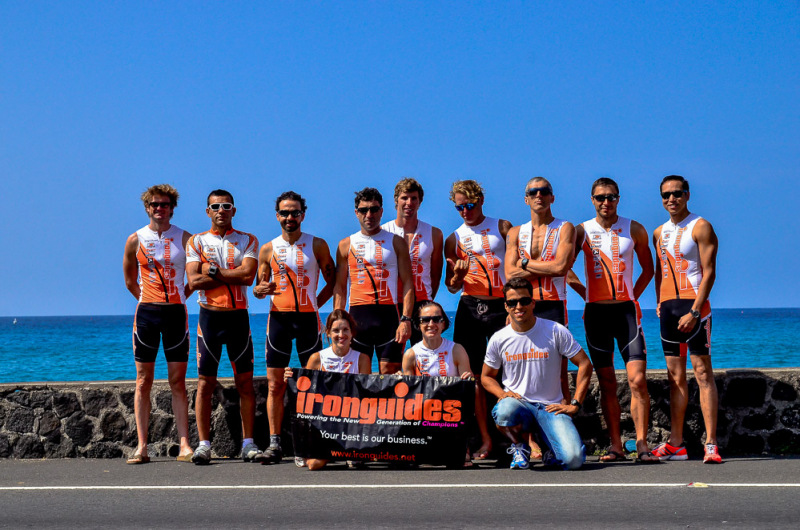
ironguides high performance training has been qualifying athletes every year since 2007 for the Ironman World Championships in Kona. Pic: Team meeting in Kona 2011 with 11 athletes
Requirements – For athletes who have completed or are aiming to finish the race in:
Sprint Distance Triathlon
Men: Sub 1h08 / Women: Sub 1h15
Weekly Training Volume: From 7 to 11h
More info
Olympic Distance Triathlon
Men: Sub 2h20 / Women: Sub 2h35
Weekly Training Volume: From 9 to 15h
More info
Half Ironman
Men: Sub 4h45 / Women: Sub 5h15
Weekly Training Volume: From 11 to 17h
More info
Ironman
Men: Sub 10h30 / Women: Sub 11h30
Weekly Training Volume: From 12 to 20h
More info

Through my work with Metasport, I have had the pleasure with meeting and working with a young man from the rural Sri Lankan village of Hikkadia, His name is Lakruwan Wijesiri or ‘Lucky’ for short.
He has been able to come to Singapore on several training and racing stints through an NGO called the Foundation of Goodness. They reach out to aspiring athletes in rural communities in Sri Lanka in need of a helping hand. Lucky came to their attention after his home was washed away in the 2004 Tsunami. He was 13 at the time. Largely through his own effort working with random groups in Sri Lanka, Lucky has won the Sri Lanka Triathlon Nationals 4 years in a row. He’s now also employed full time by the Navy and they give him an allowance to train.
He used to train a lot on his own but without any real guidance. When I met him, he was keen to raise his game and start racing at regional ITU cup level. I was utterly inspired by his journey of belief, perseverance and single mindedness and was very happy to start working with him. His simple and humble approach to life has reminded me to get back to basics, especially when challenged with ‘keeping it all together’ in busy Singapore.
When I think of Lucky chasing his dreams it inspires me to stay hungry and do the same. Thank you for your friendship Lucky!
Won his 1st race on this bike:

Check out the Aerobars!
New tools from MetaSport Members : )

Working hard at home:

1st ITU Race – Singapore Triathlon 2014

Here is an article the SwimBikeRun did on him a few months ago. Click to enlarge.


Press Release: ironguides Partners up with AsiaTRI
Introducing a new triathlon website focusing on Asia!
Asiatri.com is the leading website for all triathlon related news specific to the Asian region. “Our goal is to be the one-stop website for local athletes who are seeking the most updated content through our exclusive articles, local race coverage, international race coverage, Asian races calendar, local athlete and teams interviews and everything that is relevant to any Asian based triathlete” says Wagner Araujo who is head of MundoTRI group, a Brazilian based triathlon magazine in Portuguese language that is also launching its edition in Spanish for Latin America athletes.
AsiaTRI covers all formats and distances of the sport. Just fresh from the races is reporting on Asian athletes at the ITU World Championships. AsiaTRI aims to bring more news and coverage of Asian athletes at races to the community.
AsiaTRI is excited to help the growth of triathlon in the region by bringing the whole community together in one place. Find us at the following links:
https://www.facebook.com/asiatrilive
–
About AsiaTRI and ironguides
ironguides and MundoTri.com from Brazil are partnering and providing support to this new effort for triathlon in Asia. ironguides will provide content specific to triathlon in the region through articles, videos and training plans.
Coach Vinnie Santana on the partnership, ““We are excited to be contributing to AsiaTRI growth in this region. As a coach, I’ve always felt the need for centralized for our Asian based athletes.”
ironguides is the leading Lifestyle Facilitation company for athletes of all abilities. We provide coaching and training services and plans, as well training education, health and fitness products to help you learn and live a healthy lifestyle: https://www.ironguides.net/
MundoTri is Brazil’s largest triathlon focused website and has had a presence for over 7years. MundoTri provides the latest information and news on triathlon in Brazil and is seen as the central point for the triathlon community in Brazil. Check out more from MundoTri at: http://www.mundotri.com/
|
|||||||||||||||||||||||||||
|
|||||||||||||||||||||||||||

Road to Kona – Stefan Leijdekkers
Qualified at Ironman Cairns 2014 – M40-45 /9hr32 /6th Place
Ironman PB – 9.15 at IMWA 2013

Stefan started working with me shortly after he began triathlon and has been a joy to work with. Having pretty much a blank canvas to work with in terms of training history and ideas it was a case of Stefan getting down to work and completing the training rather than second guessing the workload and questioning volume as is common with many athletes.
Balance is the background to everything we do at ironguides and with Stefan’s demanding job in banking and a young family at home it was never going to be put to the test more. In setting up Stefan’s workload I always look at what he has to do in terms of work and make sure there is plenty of family time and relax time in his schedule!!
When designing Stefan’s programs it has been a case of making sure stimulus was present and fatigue levels remained constant but never too high. We started with a goal of hitting 8-12 hours a week and looking to get all we needed in this time, Stefan has shown a great talent with endurance. It was clear to me early on that training to strengthen this aspect of his fitness would be a waste of time. Building strength and speed has been the focus and it has paid off as we have seen a consistent rise in performance weekly over the 3 years of working together.
I think it has been frustrating for Stefan to lack speed and not perform to the levels he wanted in shorter races while we seem to do nothing but speed work, but that frustration always disappeared on ironman race day when the performances have just shone through and times dropped significantly. We always need to remember what we are training for and look at the big picture.
Over the 3 years working together I have not really increased volume beyond our basic 8-12 hours a week. If you are seeing constant improvement then it’s not time to change anything – this is such an important part of coaching that i believe is regularly missed as athletes feel more is always going to be better. The only time I move from our regular training load is for my special 4 days endurance blocks in the short period leading up to a long distance event!!
Coaching has to be a 2 way relationship and Stefan’s success has come from his amazing communication with me, I have had a weekly report every week since we started working together, I get to know everything that is happening with Stefan’s body, his workload and family life from these emails – this level of communication is what is needed so I know what is happening when its happening and can change and adapt as needed.
A little step beyond the ordinary is what makes a Kona qualifier and Stefan has shown this in spades, with a heavy travel schedule through work and entertaining clients Stefan has maintained his training well. How many of us would head to the treadmill at 10pm after a business meal and a couple of beers just to make sure the training stays on target – I am sure not many!!
See below for Stefan’s history and thoughts:
Sporting background
– Have always been “sporty” but never been (very successful) in competitive sports. Never smoked.
– I think I built my base in cycling to school from 12-18 years old: 36k per day
– Also built my base in windsurfing. Complete fanatic from 14-22 years old. Would spent entire days on the water, preferably in strong wind and high seas. Often “forgot” to eat in-between.
– Ran my first marathon in December 2007 in just below 5 hours
– My first triathlon was the Aviva Ironman 70.3 in Singapore 2009, which I completed in 5:39. I only bought my road bike after I had signed up a few months before.
Race results:
– First IM: Korea 2011 in 11:24 (largely due to nutrition issue / upset stomach making the marathon a loooong walk)
– After that each IM, apart from Cairns where I qualified, was a PB
– Best IM was IMWA 2013 in 9:15.
– Shifting goals: first goal was to finish an IM. Then you know you can do better and want to prove it to yourself. Kona only came in sight in the second half of 2013. I just missed it by 3mins42 mins at IMWA 2013.
– At IM Cairns I came 6th in my AG in 9:32 and qualified for Kona. A dream coming through!
– Did many shorter races, especially sprint and OD. Always close to the top of my age group but somehow am better at / prefer IM distance.
– Next big race is Kona. Am going to go as good as I can while absorbing the atmosphere and embracing the experience.
Coaching experience
– Started training with Woody for my first ironman. Ironman Korea 2011.
– Challenge for Woody and me was to structure the training plan around busy work commitments and family
– Consistency in training is important, even when challenged. How do you stick to your program as good (and creatively) as you can while traveling? Running usually is ok. Swim: find pools in the cities you are visiting and block time to get the swim in. Bike: use the gym bike instead. Not great but better than nothing.
– Value of coach has been critical. A few key points here:
– Methodology / the method: most IM training plans in books and online have huge volume. 20 hours or more. I don’t have that much time and I don’t think it is necessary to have such high volume in my training plan. Actually it could be counter productive. Focus on bike strength, low cadence bike work: painful but paying off. All-out intervals to help recovery. High speed short intervals on treadmill. Just some examples of workouts you wouldn’t find anywhere else and that make a big difference.
– Flexibility: Generally I have a training schedule that is the same for weeks and weeks which works well as you can see your progress. However, when needed for travel and especially injury Woody has provided great tailored workouts and training schedules.
– “6th sense: Through good communication (see below), Woody knows me very well and somehow prescribes workouts that just work for me. This 6th sense of knowing exactly what your body / mind needs is especially critical for endurance weekends and taper.
Key success factors:
– The method: high intensity, big focus on strength and speed, relatively less volume. This formula works for me and I know it works for most.
– Consistency: Trust the coach and just follow the program (sounds simple but isn’t always!). Try to get all workouts in and at least don’t skip an entire day. If no time for at least a single entire workout, do 20mins easy run, bike or swim.
– Communication: weekly email to coach with key workout stats and feedback for each workout on how you felt during and after the workout. This will allow the coach to get to know you very well and tailor the schedule, endurance weekend, taper and race strategy for you. Be honest and if workouts are skipped explain why so the coach might be able to do something about it.
– Get support from your environment: family and friends. My wife and daughter’s support has been key in training for and racing Ironman. Share the passion, do “trications” / destination races. Get the workouts in at times that don’t go at the expense of quality time with the family.


– Workout timing: for me (and most working athletes), getting a workout in first thing in the morning is important. If something happens at work you may not be able to do the evening workout or you can be so tired that it’s hard to get it in. I get up at 5:15 most morning to get a workout in before the rest wakes up. In Singapore we start the long bike on Saturday at 4:30am, also to avoid some of the heat of the day.
– Learn from mistakes and embrace things that worked in races. This applies to everything including where to position at the swim start, nutrition, race pace, etc.
Enjoy your training!
Coach Alun “Woody” Woodward


 Coach Vinnie:
  This article is about the training strategy that took ironguides athlete Leonardo Moreira to an age group win at Ironman Brazil 2011. It explains the strategies we used to win the M40-44 age group and finish in 9hr 03, a 19-minute PB for Leonardo.
 Coach Rodrigo:


 Coach Woody on his athlete, Stefan and his road to Kona with a busy work schedule and young family. Stefan also shares his history and thoughts on training with Kona as his goal.


 I joined ironguides in late 2009 after I completed my first year as a pro. I had just moved to Switzerland then and started to work 4-5 hours a day, which let me pay my triathlon expenses. It was great to start working with my coach, as he could plan my training according to my work schedule, and he increased the quality of my training a lot, though I spent less time on my bike or running. Thanks to my swimming backgound, I never had a problem to get out the water with the first pack, but thanks to ironguides my bike splits improved a lot, and I was able to stay in the lead group during the whole bike leg and I was able to start the running in a fresher condition! This consistent work was not easy, but all was worth it as I claimed my first ever Ironman title in 2011 in Korea, and have become a steady Top-10 finisher in any Ironman or Ironman 70.3 races around the world.”
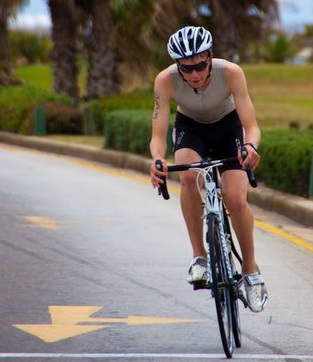 Keegan Scott “I’ve always been self-coached but didn’t want the commitment of a coach while I was interested in following a structure that works. The subscription service is a great idea as I’m still able to train using The Method, while it fits my budget and gives me flexibility to change the focus from single discipline to the balanced programme as I progress into the season.”
Recent Comments